Underestimated and Under threat – The Best of the Snowies on Foot

All photos in this post by Peter Kabaila


42

Underestimated and Under threat The Best of the Snowies on Foot

5-6/12/15

Snowy Mountains

Hiking


The first part of the trail was a fire road. Used to be a public road. Dad had driven my brothers and I almost to the very top of Kosciuszko in the early 60’s. We walked up the same road, now closed to all but walkers, cyclists, skiers and Parks people. Gently uphill. The packs settled in to our shoulders. Chris was on his first overnight walk for decades. The other six of us had more recent experience with the loads on our backs. In August 1985 Stephen Crean, the brother of politician Simon, had disappeared somewhere along this section while skiing from Charlottes Pass to Thredbo. Wild stories postulated his fate until his remains were found by chance a long time later.

At the Snowy River crossing we rested and refilled water bottles. Here it is a small stream bubbling between granite boulders and fields of alpine plants. In one sweep you can take in its entire catchment in the shallow plateaued hollow bounded by the Ramshead, Etheridge and Stillwell ranges of small rocky peaks near the top of Australia. From here it builds before waterfalling and rushing down to be met by Spencers Creek before it hits the wall at Guthega Dam. Downstream of the dam it becomes a tale of wild river tamed, contained, dammed and shut in and redirected by “development”. The Snowy Scheme uses the water for hydro power before sending it through to the west side of the mountains for irrigation. Now the fight is on for the reestablishment of environmental flows to be released into the original river system to reinvigorate its health. 2% of its original water for one of the country’s wildest rivers just isn’t enough. Our “development” stretches deeper even than this in the current attempt to offset climate change by cloud seeding to increase diminishing winter snowfall.

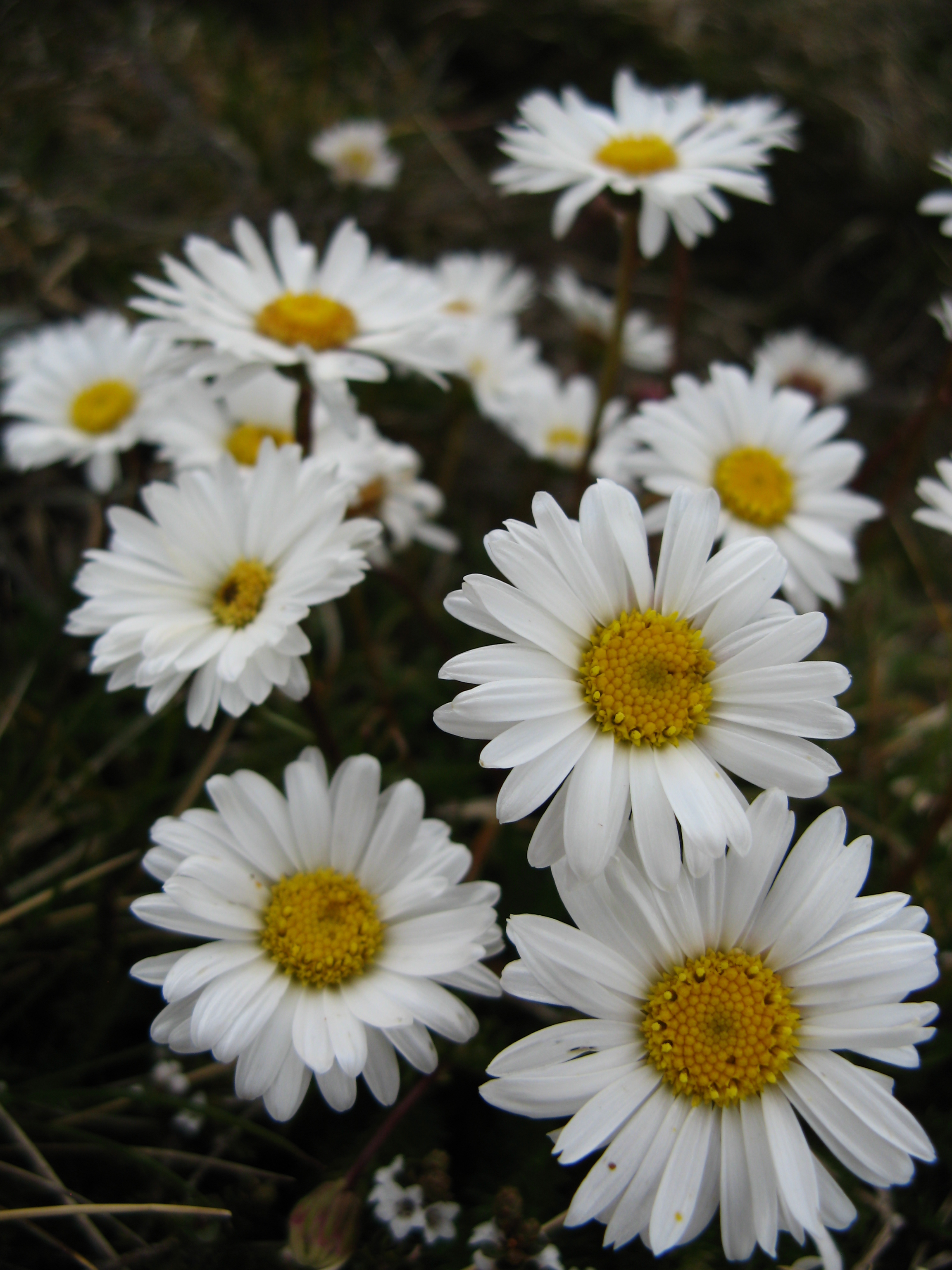
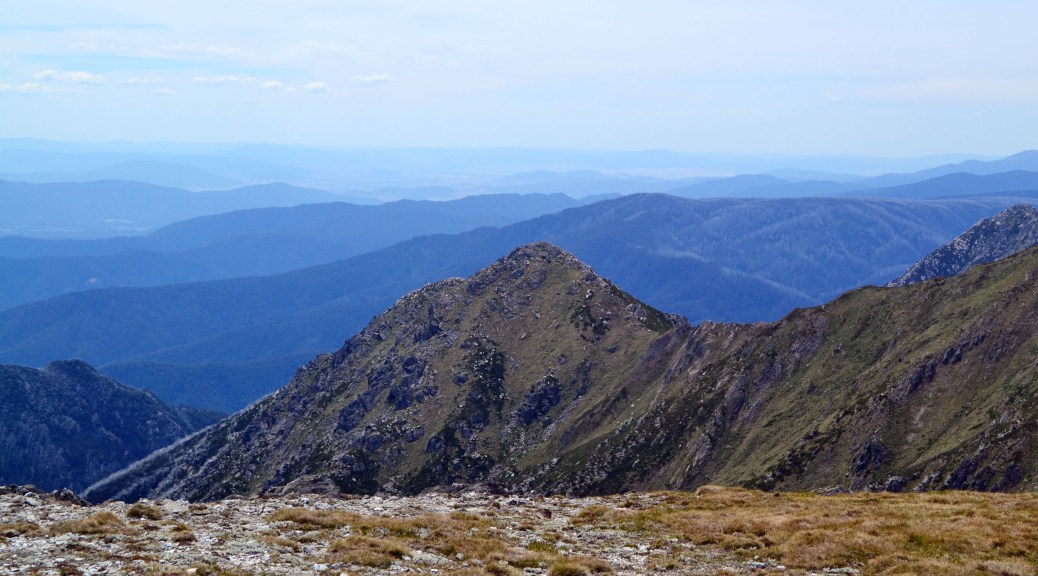
DSC_0206 IMG_0276As we ascended the next steeper section the horizon extended with vistas in all directions. The Snowy River valley meandered northwards, the Main Range mountains lined up in the west and the Monaro Plains blued the distant east. At Seamans Hut another rest, a breather this time. Laurie Seaman had perished here in a blizzard in 1928 and his mate Evan Hayes not far away. Seaman’s parents sponsored the building of the shelter hut. In the big snow year of 1980 Cath and I had brought crampons, an ice axe and all our toughest gear for an attempt to cross the main range in winter. We camped in the lee of the hut as atrocious weather struck. In the early evening a bedraggled group of scouts arrived at the hut with tales of a leader and another scout lost up higher near Rawsons Pass. The wind overnight pummelled our Antarctic strength tunnel tent nearly flat. We abandoned our trip and skied out at first light to raise the alarm and initiate a rescue. Turned out they were from WA and very ill prepared.

From Seamans Hut the trail climbs and winds round the edge of the Etheridge Range. I looked across the cliffed eastern slopes into the sheltered areas where four snowboarders had died in 1999. They were experienced in the mountains and established a high  snowcave from where they intended to access some of the best untracked terrain in Australia. A huge dump of snow caught them unawares in the night. Wind from the southwest blew masses of powder snow over the range which then accumulated and settled on the lee side right on top of their base camp. The snow sealed off their ventilation as they slept and then asphyxiated. Their bodies were not found until the spring thaw. I’d had a school group out in a similar situation in a sheltered place below a ridge. Massive snowfall settled on our tents and in the night I got up three times to dig them free of the 90cm of powder that built over us. One of our walking party, Peter, had a narrow escape that night having dug himself out of his own snowcave as I made my first round from tent to tent with the snow shovel. We had embraced and thanked his lucky stars in the midst of the maelstrom.

At Rawsons Pass we rested again and refuelled. Peter connected up with some Asian tourists. Mountainbikers parked their bikes. The trek to the summit became crowded. A long distance trail runner sweated past. Mount Kosciuszko is one of the world’s Seven Summits – the highest mountains on each continent. To climb these Seven Summits is a massive undertaking and was quite an achievement for the first successful mountaineers. The danger and challenge has not diminished but commercialisation has widened the number and capabilities of people attempting it. Guiding companies can even take clients to the top of Everest and Denali for the appropriate fee ($60,000US for Everest). I have tried to take student groups cross country skiing up Kosciuszko a couple of times but never managed the summit even though it is only 6km from the Thredbo chairlift top station. The snow is always icy, the weather often not good. The last aborted attempt was due to deteriorating conditions and a forecast blizzard later in the day. We saw a party of Japanese mountaineers setting off for the summit that day as we pulled the pin and headed back down. As the storm developed we heard that they had been trying their seventh and last summit on the list, and the lowest. They had been advised not to go that day but had time constraints with connecting transport and flights so had not heeded the advice of their guiding company. Apparently they did not make it and needed a full scale National Parks, SES and Police Rescue team to bring them back to safety.

The weather for us was perfect. Clear and warm but not hot. The wild blue yonder of the western slopes and Victoria came into view as we circled up to the big cairn on top. Chris had never been there before so the obligatory photos were taken and sent to his family back in Canberra. The scene with snowdrifts, rocky outcrops, peaks and dramatic cloudscapes was straight out of the famous Eugene Von Gerard painting from centuries prior. Distant Mount Jagungal beckoned in the north.

One of the best sections of our route, now on a walking path rather than fire road, was from Kosciuszko north towards Lake Albina and Muellers Pass. The track descends a narrow ridge with deep valleys on either side. Less of the tourist walkers take this track around the Lakes Walk. At a lookout rock I spied two brumbies at the bottom of the valley to the east below Rawsons Pass. Two sleek black horses strolled at ease, grazing. I felt conflicted between the colonial patriotism of “The Man From Snowy River” and all it stands for. DSC_0069Wild horses running free through the high country. Stockmen galloping after them. Chasing the country’s rural heritage which is so much part of our national psyche. A connection with The Bush and our rural past that many of us hanker for. Later that day we would camp in a sublime hanging grove of streams and delicate cushion plants and alpine bog – the areas so fragile under the brumbies’ hooves. The horses were grazing in the vicinity of the old Kunama Lodge which was part of one of the earliest ski tows for adventurous skiers on the main range. It operated in the early 50’s until an avalanche swept away the hut and killed Roslyn Twynam Wesche in 1956. The hut, tow facilities and nearby stockmans huts have all been since removed. Similarly Lake Albina Lodge and the Soil Conservation huts have also been removed from the Main Range area.

Stone paved steps led past rocky outcrops and above large snowdrifts. After Muellers Pass the track was dug into very steep slopes and we sidled across the side of Mount Northcote. Lake Albina perched on our left in a stunning glacial valley that plunged deep into Lady Northcotes Canyon. We had struggled down and back up out of there from Watsons Crags years before. Steep and treacherous country. Across Lake Albina rose Mount Townsend, probably the best of the highest mountains. It is a real peak, isolated, rocky, steep and imposing. This was the mountain Prabhdeep Srawn was heading for in 2013 before he disappeared. Extensive searches since have not yet found any trace of him and the coroner has ruled that he most likely died in the mountains.
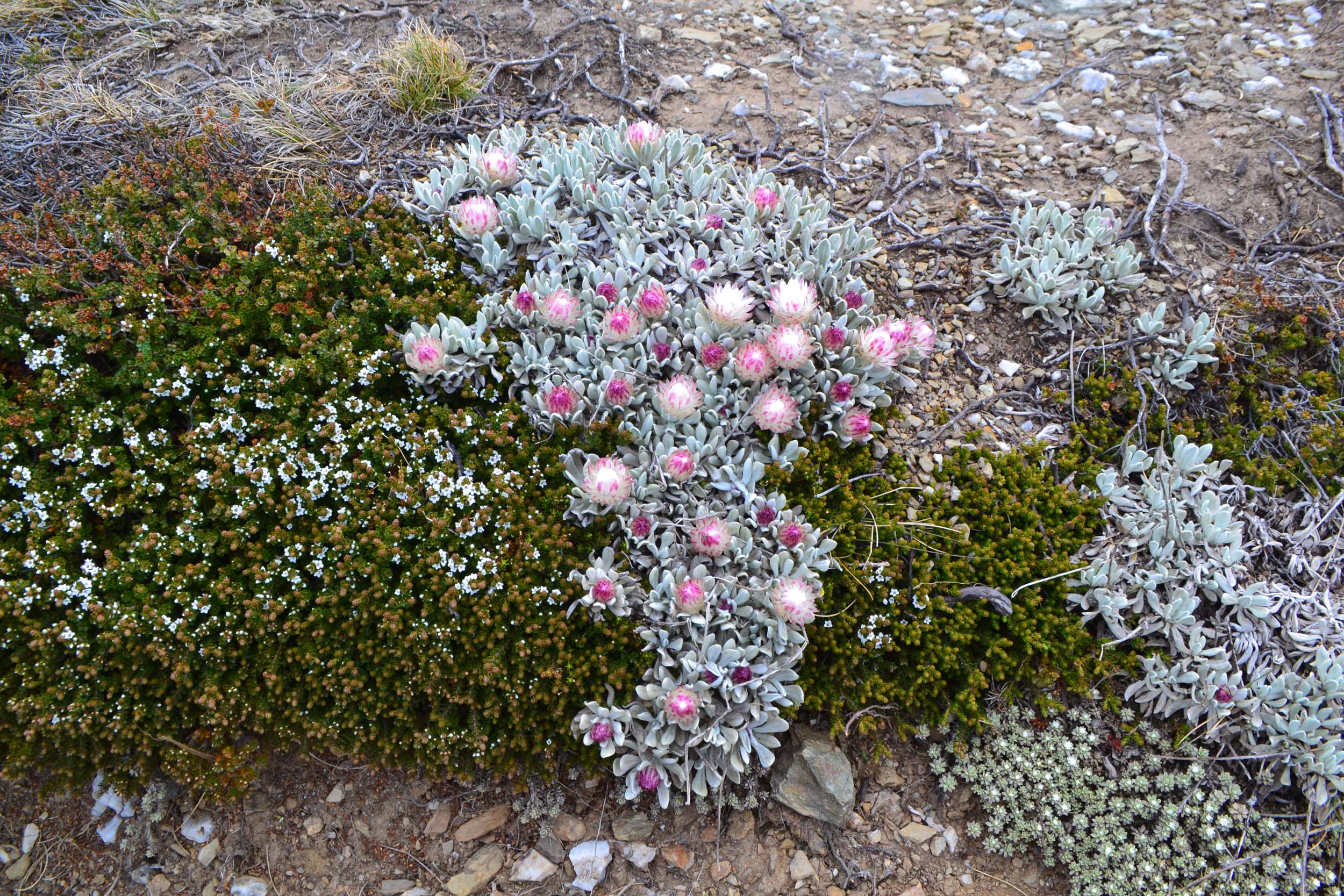
DSC_0119Traversing Mount Northcote is one of the major challenges on a winter crossing of the Main Range. It is steep on all sides and being exposed to the worst of the weather is nearly always covered in a veneer of wind blasted ice. I have made it across twice. The first time my mountaineering experienced brother cut steps across the steeps with an ice axe so we could walk and carry our non metal edged skis. Even this was scary as any slip would end several hundred meters below. On the second time I was a better skier and tracked across on metal edges with a heavy pack. Until the edges caught a sastrugi bump and I skittered off downhill at accelerating pace towards the rocks and frozen lake below. I managed to twist over onto my stomach and grab the tip of one ski pole which I forced into the ice. Luckily the point dug in and I slowed to a stop. Mt buddy now high above could not do anything. I had very tentatively stood up again on the edges and stepped up and across to the saddle with no confidence and with great fear. Our view over lunch of blue ranges and plain lands to the west was framed with Mt. Townsend and Watsons Crags. Spectacular.

People in the group chatted in pairs or trudged solitarily up to the top of Mount Carruthers. This is a rounded hill but is in a fine position among the steepest parts of the range. Club Lake was far below. A few large snowdrifts remained in the shadier slopes. Hardy micro alpine plants and flowers grew in stony areas over these hilltops and ridges. “How much further to Go?” The harder part of the day was upon us. Tired. Sore shoulders. Running low on water.

We skirted the top of Blue Lake. We had experienced multiple wild nights camped down there in winter. The nights always seem to be the worst. My brother had spent 5 days huddled in the squalid emergency basement of the Soil Conservation Hut in an endless blizzard. Before the time of mobile phones we just had to sit it out at home waiting for word from him which eventually came through. Another time a friend had work commitments so tried to ski out in a whiteout and managed to ski in a complete circle, luckily ending up back at our camp 3 hours later. The cliffs and gullies that lead down to the lake were well below our track across the tops. In 2008 Tom Carr-Boyd was skiing along an ice cornice in this area. His brother below noticed that he was in a dangerous situation and yelled at him to move back. In trying to get back from the edge the overhanging ice broke and avalanched Tom to his death below.

Jerry left us on the final climb of the day up Mount Twynam and rejoined the Lakes Walk trail back to Charlottes Pass. The view back towards Kosciuszko from Twynam was full of Von Gerard cloud drama, rocky foreground, snowdrifted peaks and dark green valleys.

DSC_0144We romped down snowgrass meadows and rock slabs to our camp in a small hanging glaciated cirque below the summit dome of Twynam. This place reminds me of stunning photos of Sierra Nevada landscapes. Granite cliffs formed a backdrop. Two streams fed by large snowdrifts tumbled over boulders and small falls to flow more slowly across our enclosed flats. Soft plants and patches of coloured wildflowers carpeted the floor. Camp was set up on a flat soft space between rocky bluffs and a creek. Peter and Amanda camped out further at the edge where the ground dropped away to the valley and the main stream flowed downwards. Our tents added more colour to the alpine mountain scene. The landscape encouraged a relaxed afternoon tea taking it all in then exploration. Bob followed a stream up to a waterfall. Chris found a high rock vantage point. Cath stretched beside the creek. I climbed the easy angled rock and snow slopes. Peter took photos. The place had a pristine magical feel. Cosy, intricate, untouched. A hidden gem among the grand peaks of the Main Range.DSC_0190
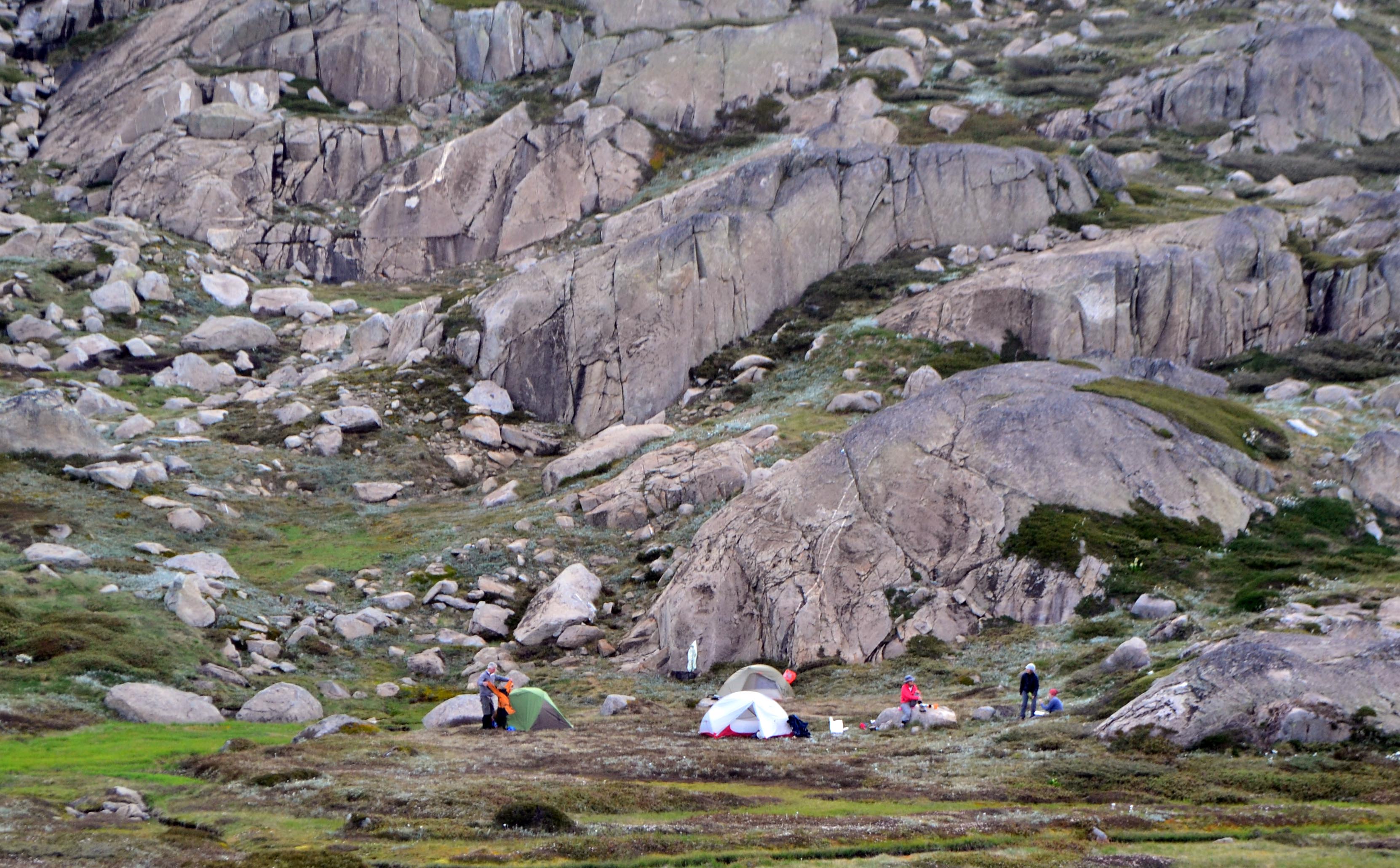
Overnight the dark blanket of sky was heavy with stars. In the morning the alpenglow pinked then yellowed before the dawn. Breakfast as the sun rose. We were all reluctant to leave.

DSC_0199Off the main route we picked up the faint path of the Australian Alps Walking Track. Along the spine of the range we passed Mount Anton then climbed Mount Anderson and traversed below Mann Bluff. The flowers across this section were the best we had seen. Still a little before their prime they patchworked the meadows in sprays of white and yellow and pink. Everywhere you looked was a scene from the “Sound of Music”. Steep, deep valleys fell away on the left and on the right was the Snowy River way below and on its far bank the hills rose to the ski slopes of Perisher Blue. Occasional bits of wire and fence posts were the only reminders to our untrained eyes that this used to be grazing land before it was national park. Amanda peak bagged Mount Tate over an early lunch. From here the route of the whole hike was laid out. It seemed like a long way. This two day combination of linked up trails must be one of the best walks in Australia and the equivalent of any hike in the world.

At Consett Stephen Pass it became clear to some of us that there was still several kilometres to walk. We climbed to a high point east of the pass then headed across open snowgrass country to the south east. The pace slowed and the group quietened. Eventually we found the start of a faint track that took us down a ridge towards Guthega Dam. Through more patches of wildflowers among eerie snowgum tree skeletons from a previous fire. Half way down we rested. This was the tough bit for some. Sore shoulders, dodgy knees hurting, tired, thought we would have been finished by now, getting hot. Chris had hit the wall (he told us later) but pushed stoically onwards.
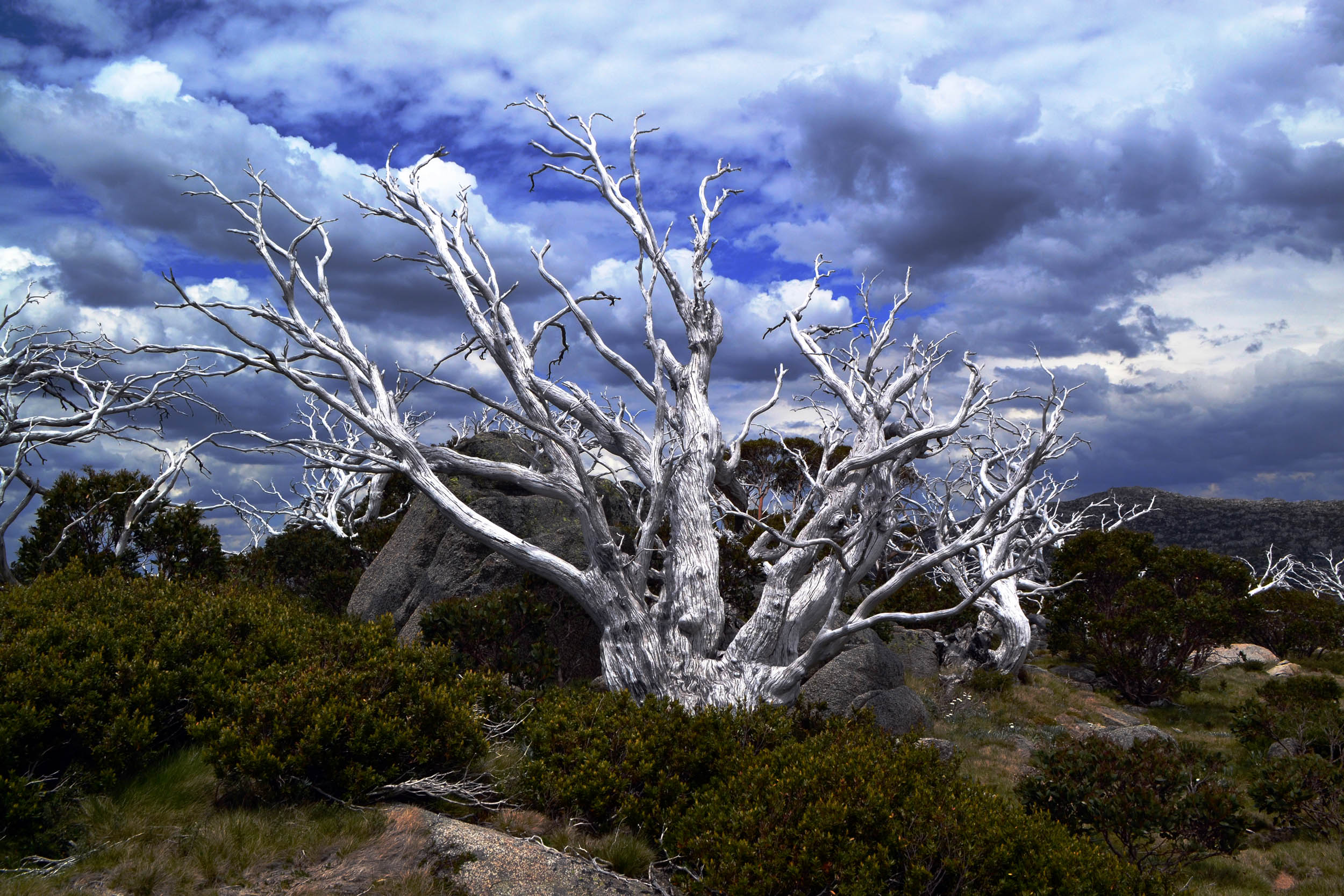
DSC_0344Crossing the dam wall thrust us back into development and civilisation with a thump. Slow steps up the final hill to the car.

Coffee, pastries, pies at the bakery in Jindabyne. The simple pleasures of finishing a demanding hike. Everything had gone like clockwork. Our bodies had held up. This had been a short but very rich experience, a classic journey taking in the best of the Snowy Mountains. Safe. The weather had been delightfully kind – calm and cool.


Day 1 – Charlottes Pass to Seamans Hut to Rawsons Pass to summit of Mount Kosciuszko to Mount Carruthers (at this point the Lakes Walk branches off) to Mount Twynam then down to camp just to the north of Little Twynam – about 18km

Day 2 – Little Twynam camp to north east ridge of Twynam then Mount Anton to Mount Anderson to Mann Bluff to Mount Tate to Consett Stephen Pass then down the long ridge to Guthega Dam and up to Guthega Village – about 14km

Volunteer

41

Volunteer

3/12/15

Budawang Ranges

Hiking


Grass tree flower spikes were covered with white, honeyed bloom brushes. As we walked gently uphill through forest the pace settled into a steady rhythm. Chat. Walk. Talk. At a conglomerate rock we morning teaed. Then downhill to the turnoff from the main path into the Budawang Ranges from our starting point at Wog Wog carpark. The superb vistas from Corang Peak, prehistoric landscape of Burrumbeet Brook, the towering sandstone massifs of Mount Owen and The Castle that lay beyond the other worldly Monolith Valley were all down that main path. Our less visible trail headed off left.

IMG_0207

This was my first time leading a walk for the group. “Corang Cascades, 15km, mostly on bushwalking tracks with some stony sections.” Cath especially and I had done quite a few walks with this group over the year. Coordinated by Andrew, who had led morIMG_0214e than a hundred over the years and Ray who must have done way more than this even. It was a trail we had done recently and I’d done several times before. It was remote but had a decent track and was a good distance. The route led us down a rocky spine into a delightfully cool, moist creekbed.
In my “retired” life of less than a year I was still working through how best to use my time. Being time rich is such a treat, a source of wealth. With gratefulness I feel lucky to be able to afford to finish full time work. So now the balance includes having lots of time with Cath, doing some personal adventures, writing, extended family time and trying to spend some time having a positive impact on the world. Contributing. Like leading this walk for others, for the club that has provided enjoyment for us. Once a month I help out with landcare in the catchment – planting trees, erosion control etc. Vinies Night Patrol enables me to make coffees and chat with the homeless and downtrodden and lonely of Canberra also once a month. Next year we will do two weeks on a conservation property at Lake Eyre. And I coach and mentor a niece with her high school academics every Monday afternoon. I’m still looking for a way to assist with refugees and the environment in more meaningful ways but am not quite ready to jump in deeper just yet.

Another descent into a creek and ascent out of the gully. Into the heath. Hot. Scratchy. Hard to see above it. Awkward. This was the tough bit. It seemed to go on for ages.

Volunteering. Being of service to others in some way. It feels right. To balance our comfortable lifestyle. To assuage guilt for our life of “luxury” in Australia perhaps. In Australia about 30% of the population (6 million) do some kind of voluntary work, caring or contribution to society. Some stats from Volunteering Australia give a powerful picture of the generosity and commitment of Australians.

Age

In 2010, the volunteer rates for adults by age group were:

  • 18-24 years – 27%
  • 25-34 years – 30%
  • 35-44 years – 42%
  • 45-54 years– 44%
  • 55-64 years – 43%
  • 65+ years – 31%
  • Overall – 36.2% of the adult population.

Labour force status

In 2010, the volunteer rates for adults by labour force status were:

  • Employed full time – 38%
  • Employed part-time – 44%
  • Unemployed – 20%
  • Retired – 31%
  • Others not in the labour force – 30%.

Frequency

In 2010, the frequency of work done by volunteers was:

  • At least once a week – 35%
  • At least once a fortnight – 11%
  • At least once a month – 16%
  • Several times per year – 24%
  • Less regularly – 14%

In 2006, Australian volunteers worked a total of 713 million hours. The median number of hours worked by each volunteer, broken down by age and gender was:

  • 18-24 years – 48 hours per year
  • 25-34 years – 38 hours per year
  • 35-44 years – 48 hours per year
  • 45-54 years – 64 hours per year
  • 55-64 years – 80 hours per year
  • 65-74 years – 104 hours per year
  • 75-84 years – 104 hours per year
  • 85 + years – figure considered unreliable
  • Total for men – 52 hours per year
  • Total for women – 60 hours per year
  • Total for all people – 56 hours per year (or 1.1 hours per week).

Why people volunteer

In 2006, the reasons why people volunteered were:

  • Help others/community – 57%
  • Personal satisfaction – 44%
  • Personal/family involvement – 37%
  • To do something worthwhile – 36%
  • Social contact – 22%
  • Use skills/experience – 16%
  • To be active – 16%
  • Religious beliefs – 15%
  • Other – 20%

The Real Economic Value of Volunteering

Dr Lisel O’Dwyer (University of Adelaide) estimated the dollar value of the contributions made by Australian volunteers in 2010, based on the average annual number of hours worked multiplied by the average wage rate. She estimated that in 2010, formal volunteering (excluding travel) was worth $25.4 billion to the Australian economy.

Notes on adjusted value: Dr O’Dwyer also argued that because the value of volunteering is attached to a multiplicity of outcomes, one hour of a volunteer’s time should be valued not just once, but several times (to account for other entities that benefit from the volunteer’s time). Based on this reasoning, she estimated an adjusted total value of volunteering in 2010 at around $200 billion (using a multiplier of 25% of the average hourly rate multiplied by four entities).

Volunteering and happiness

Volunteering Australia has compiled the following facts about volunteering and happiness:xli

  • Volunteers are happier, healthier and sleep better than those who don’t volunteer – doctors should recommend it.xlii
  • 96% of volunteers say that it “makes people happier.” xliii
  • 95% of volunteers say that volunteering is related to feelings of wellbeing. xliv
  • Volunteering results in a “helper’s high,” a powerful physical and emotional feeling experienced when directly helping others.xlv
  • Just a few hours of volunteer work makes a difference in happiness and mood. xlvi
  • Sustained volunteering is associated with better mental health. xlvii
  • Altruistic emotions and behaviours are associated with greater well-being, health, and longevity. xlviii
  • A strong correlation exists between the well-being, happiness, health, and longevity of people who are emotionally kind and compassionate in their charitable helping activities. xlix
  • The experience of helping others provides meaning, a sense of self-worth, a social role and health enhancement. l
  • Volunteering is highly associated with greater health and happiness. Li

http://www.volunteeringaustralia.org/wp-content/uploads/VA-Key-statistics-about-Australian-volunteering-16-April-20151.pdf

Eventually we cleared the heath and made our way more easily through scribbly gum woodland. Descending in the heat of the day the sound of water tumbling over rocks slowly built. We broke out of the bush onto the river. Upstream was the large platypus pool and downstream the cascades. Shoes off. Relax. Cool feet. Photos. Lunch. A dip for a few that braved the cold. A check with Andrew’s gps confirmed that the walk was going to be longer than advertised.

IMG_0233


IMG_0231

Back through the heath seemed shorter on the return trek.

In the forest at the 15km mark I announced, “Since you have all been such a good walking group for no extra cost you are all eligible for the special bonus prize of an extra 3km!”

Afternoon tea back at the cars. “Thanks for leading the walk.” One small part of crafting a meaningful life falls into place.

Wog Wog carpark on the Mongarlowe Road to Corang Cascades 18km return

Capture

The section of the Morton National Park we had been walking in had been purchased with funds from the volunteer efforts of the Budawang Committee.


Respect, Admiration and Gratitude

40

Respect, Admiration and Gratitude

2/12/15

Booroomba Rocks

Rockclimbing – with Neil Montgomery

Took a little time putting his boots on. Then he put the rack on over his slings and had to shuffle them back over. A few large cams were taken off. A new belay device hung on his new harness. Not dithering. But not fluent. Rusty. Weighing it all up in his head.

“People don’t use stopper knots anymore do they?”

It had been a while. Years since he had climbed properly. Now here we were at the bottom of our local crag’s classic climb. Equilibrium. The perfect slab. The perfect climb for us both. Hard enough. Beautiful polished granite. Two superb pitches. Cool summer day. Gentle breeze. Like everything had been laid out for us.

It had taken about a decade. For me to entice him out from his always busy world for just a day where we could climb together. For fun. Just us. No students. Not PD. Just a climb. Where we’d both started independently about 40 years prior. On rock. Just one day. Precious.

First steps up were smooth. A wire in a thin crack. Then a sling over a spike. Not many people even notice them these days. More moves up the slanting groove. Fluid and confident as the protection thinned and he was straight back into the mindset. My hands could feel it as the rope paid out steadily. Runners in, he moved straight up the committing wall to the belay. He slowed again there and laced up a bombproof anchor.

“Safe”.

35 years ago I’d chanced a job at an Outdoor School teaching mainly environmental studies and a sprinkling of adventure activities. Over a long time there I kept hearing rumours of a guy at Narabundah College doing phenomenal things in his outdoor ed program. Caving in the Nullarbor. Ocean Sailing. Hiking in Tasmania and the Gammon Ranges. Climbing at Arapiles and the Warrumbungles. Amazing. Abseiling into the Big Hole 90 meters then jumaring out. Snowcamping trips. Wow. It seemed that whatever adventures I could dream of he was already doing with high powered students. Like there was no limit to what was possible. So long as everyone came back safely. He trusted the students with safety and good judgement. They trusted him. The school trusted him. The Department of Education trusted him. He carved out and pioneered the very best outdoor education course in the country. Safety guidelines and standards followed where he led. Somewhere I picked up a copy of his “Single Rope Techniques” book. I began to picture a person of quite extraordinary outdoor and adventure skills and knowledge. Occasional meetings we participated in together reinforced this. His course grew to include units like Lead Climbing, Advanced Vertical Caving, Bushwalking Leadership so students could incorporate these amazing trips into their academic programs.

On the belay ledge we chatted about the Larapinta Trail that he had done with a group that had 10 out 12 days of cold and rain. My recent tough personal experience seemed like a doddle in comparison. We swapped the rack and I led the next pitch placing a few wires early on then clipping two new bolts on the thinner section. I anchored on a tree and lowered so I could see him on the way up. Catlike he padded up as I took a couple of photos.

“1983 to 2012”. He responded about how long he had worked at the college. A friend of mine, who worked in the Maths faculty where Neil also taught the smartest kids in the territory, had told me that he was the most popular teacher among the student cohort in that subject. His classes were the first to fill up to bursting. Only sometimes when you get to know someone how they are matches the impression you might have of them. Like an onion every layer of Neil that was revealed to me increased my respect. He had resisted the promotional ladder in school as he loved teaching so much. I had managed in about 20 years to wrangle my way onto two of his outdoor ed day trips. Both were incredible. Wyanbene Cave took us through cold cold cold water into the Gunbarrel Aven and on to the very end. Then back. Way more advanced and challenging than I would ever contemplate. Similarly Jerarra Creek Canyon had multiple abseils and a scary climb out. Of course his students handled it all beautifully. In the cold darkness of night on exit from Wyanbene as we changed, freezing, out of wet overalls he warmed the massive pot of minestrone soup he’d made at home and brought for the group. It was only much later I started to fully appreciate the significance of this type of generosity and care and planning. His leading and relationships with students were the most naturally skilful and genuine I had ever witnessed. In leadership theory “situational leadership” is good for aspiring outdoor education teachers to work towards. At higher levels of capability come “charismatic” leaders, “transactional leadership” and “servant” leadership qualities. At the pointy end the best leaders are “transformational” and “authentic”. Neil’s leadership stretched beyond even this and aligned beautifully with the latest in leadership theory. His head, heart, body and soul seemed to etch his being among those around him. Passion, strength, imagination, humility suffused his work. He seemed intuitively in tune with the people and the world around him. I could see that his groups became communities where each person was cared for and appreciated. He had an almost tangible “presence’ in the group and led with a spirit that rose from a deep well of concern for “the good of humanity and the natural world” (Smith, 2011). Extraordinary. Overnight at Wyanbene he shared his deep knowledge of astronomy and the universe as we sat around the fire. I began to sense a huge intellect. During his 30 years at Narabundah he had met his wife there and then in time brought his own children through.

He enjoyed the next lead across the top of the Northern Slabs to the easier ground. Lots of pro, a moac even and more spikes slung in good old style. As we rolled the ropes he recounted how he had lived the dream in his twenties spending years doing caving expeditions, living overseas and climbing in the USA at all the places I had spent a whole adulthood dreaming about – Yosemite (he storied about an epic on the Salathe Wall), Tuolumne Meadows, Joshua Tree and the Sierras – like a sort of bubbling stream of music pictures and landscapes flowed through my mind as we talked about his early premature “retirement” before he had even started working properly. Now I was at the other end filling my retirement with adventure days like this somehow bookending our two lives in a small way.

Early afternoon. He brewed up some tea over lunch. Now he works at ANU in the science and maths faculty. He is acknowledged and valued highly there for his unusually high level of teaching skill and experience and care for his students. Some things never change. We talked about research and he intimated ideas of a new way of looking at time and motion and philosophy that he is working on. As the concepts washed through my mind I pictured him in his office, across the corridor from one of Australia’s Nobel Prize winning physicists, with his own Nobel Prize if there was one for being an outdoor leader, a teacher, an inspiration, a mentor, a pioneer and just the person he is.

Later Neil found more spikes to sling and threaded his way with cams and wires up the two main pitches of a more moderate climb. This brought back more confidence and finesse to his moves on the vertical walls and cracks. On the final section of the day he pulled through some harder layaway steeps. In my own outdoor education work I was able to follow his lead into a series of wonderful adventures and life changing experiences with my own group of fabulous students. I couldn’t have forged a more challenging, meaningful and enjoyable period of work in education. For that I owe him profound gratitude for the courage and imagination to set up the possibilities of my own trail.

At the end of the day we were both satiated. Smiling.  Content. Back at the crag. “Derwentias” he said, noticing my interest in a beautiful purple flowered plant along the side of track back to our packs. “I’ve planted heaps in my garden at home”.

A few days later Neil emailed offering to return one piece of gear “next time” on a possible night climbing escapade when the weather would probably be too hot during the day. I had a delightful image of us enjoying more occasional perfect days like this one into the future.

I’m not embarrassed to have a few well-chosen heroes to admire and try to emulate. Especially those in our own circles.

IMG_0323

Thanks to Heidi Smith for providing some of the words and concepts on leadership Unpublished PhD thesis Extraordinary Outdoor Leaders: An Australian Case Study 2011, UOW

Friends Fab Fun on the river

39

Friends Fab Fun on the river

14/11/15

Cotter to Urriara Crossing

1.43 on guage at Mt. McDonald

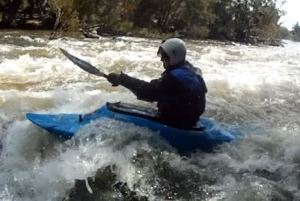
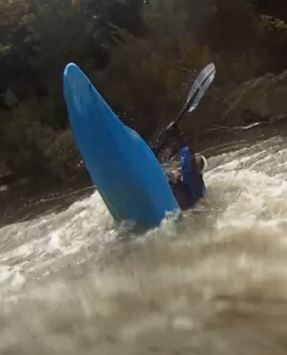
Capture5Another short day on the river whitewater kayaking. The level had been holding for a while with recent rain continuing. Canberra whitewater used to be more reliable but now it’s a matter of when the river is up you need to get in the water quick. Friends, boats, paddles, we were all in. Or mostly. Caleb rolled and pirouetted and nose dived and tailied and played like a pro who had never been far from the flow. I took it easy and surfed a lot but didn’t swim this time. DanM ran all the bigger lines and surfed like there was no tomorrow in his yellow banana. And Mitch and DanG pushed themselves and surfed and drank a little water upside down. The Gopro lit up and did all the right things to capture all the action then spat the dummy and lost all the footage. Oh No! Disappointment. It would have been a ripper compilation. Oh well, we’ll have to do it all again when it rains next.
Capture4Capture3

Fog

38

Fog

11/11/15

Camels Hump and Pierce Trig

Hiking

18km


Rain thrashed the windscreen and unsettled me as we drove home from the pickup point on the other side of town. Our three passengers must have thought Canberra was a place of wild weather.

Ali, Mohsin and Basir had arrived in Australia 3 years previously. They had left Afghanistan and Pakistan and journeyed via Singapore and lastly by boat from Indonesia to end up on Christmas Island as asylum seekers.  A month later they were transferred to detention centres on the mainland and later allowed to live in a large city within the Australian community. We were reluctant to ask too much about their journeys and experiences for fear of raising painful and disturbing memories and emotions. They were on a familiarisation trip to rural Australia and to search for work. Until a month ago they had not been allowed to work. For three years they have been waiting, living in limbo, wondering what Immigration will decide for them, unable to see the future.

We offered them what we could. Food. A free place to stay on their trip north. Chat about cricket. A friendly welcome to Canberra. A look at Parliament House and the Lake. Then they were off in the morning and returned a few days later for another night on their way back south. We drove up Mt. Ainslie for the view of the city. The use of our wifi. Small things indeed from the huge wealth of our average Australian lives. In the where-to-be-born index (QLI) we rank 2nd in the world with Pakistan a lowly 75th and Afghanistan not even rated (this measures a country’s ability to provide opportunities for a healthy, safe and prosperous life).

As Hazaras Ali, Mohsin and Basir had left their homelands, leaving behind massacres under the Taliban, a long history of discrimination, decades of war in Afghanistan and sectarian violence in Pakistan. Hazaras are targeted by militant groups and Human Rights Watch estimates that more than one hundred have been murdered in Quetta this year. Many Hazaras have drowned from boats trying to reach Australia and the MV Tampa rescued a boatload of mainly Hazaras that were sent to Nauru.

In the morning we drank tea and ate toast before leaving early to take our three guests back over to the other side of town where they were to meet their transport. During an awkward quiet moment in the car we switched on the radio at the exact same time as the start of a news story about the death of an asylum seeker on Christmas Island who had taken his own life in despair. This had sparked riots in the detention centre where convicted criminals are housed with asylum seekers. The quiet in the car seemed to deepen. Outside the day was grey and overcast.

Cath and I dropped them off, wished them well and then drove to the mountains for our walk.

Raincoats. Drizzle. Up the steep fire trail through forest. My head was fuddled and conflicted. I found it hard to focus on the present. Thought patterns and emotional responses clouded me in. When I started conversations to make contact with some others in the group by showing courteous interest in them I ended up being harangued by a couple of insensitive older bores. Higher up we reached the cloud level and entered thick mist. Eerie. Quiet. Still. No views.IMG_0174I walked on my own for a while trying to clear my head and get above the clouds. Large eucalypts stood like guardians on either side of the track. The peak was deemed too dangerous to push on for in the slippery conditions. We lunched forlornly sitting and resting on the damp earth. On one side the bush was pristine and had its own dripping beauty. On the other were black stumps and dead bushes of a recent fire – occasionally new green shoots appeared. At a high point a cliff dropped away into thick grey murkiness.

The pace slowed on the long way down. Tired legs. Only the foreground to see. Head still in the clouds. Eventually I left the three somewhere up there – enveloped in their own fog, unable to see a way out or take any control, bewildered by the inhumanity of it all, the unfairness. Lower down, for me, it cleared. I could see across the valley to the ridges opposite, the green fields, a house in the distance.20151111_144414

Later that evening I listened to a local nun, Sister Jane, talk about her despair at our (Australia’s) treatment of asylum seekers and refugees and her plan to bear witness for the month of lent on the steps of Parliament House. The story of an African fellow who was now working in Canberra as a social worker having escaped beatings, political oppression and death threats in Zimbabwe to become a refugee here. Jon Stanhope’s scathing criticism of his beloved Labour Party and their stance on the “indefinite, mandatory, offshore detention” of asylum seekers, the lifelong trauma caused by the detention of children and a UN report detailing our torture of detainees at Mannus. And George Browning questioning whether Australia (we) was actually contributing to conditions that produce refugees (foreign aid at its lowest level, refusal to engage with the wrongs in the world like East Timor, our interference across the world like the invasion of Iraq and the resultant growth of ISIS and our refusal to join the responsible world in properly addressing climate change).

Later again as I read Tim Winton’s “Palm Sunday Plea: Start the soul searching Australia” everything cleared a little more and my perspective became less conflicted.


http://www.smh.com.au/comment/tim-wintons-palm-sunday-plea-start-the-soulsearching-australia-20150328-1ma5so.html

The Economist Intelligence Unit’s where-to-be-born index (previously called the quality-of-life index, abbreviated QLI) attempts to measure which country will provide the best opportunities for a healthy, safe and prosperous life in the years ahead.  https://en.wikipedia.org/wiki/Where-to-be-born_Index

Insight: Pakistani death squads spur desperate journey to Australia  http://www.reuters.com/article/2012/10/25/us-pakistan-hazaras-idUSBRE89N1LP20121025#ZS2VwGHI2DzuFhtI.97

Names have been changed to protect the identities of the guests.

Fields of flowers

37

Fields of flowers

4/11/15

Short Wednesday walk – Tuggeranong Hill. 8km. 2 ¼ hours.

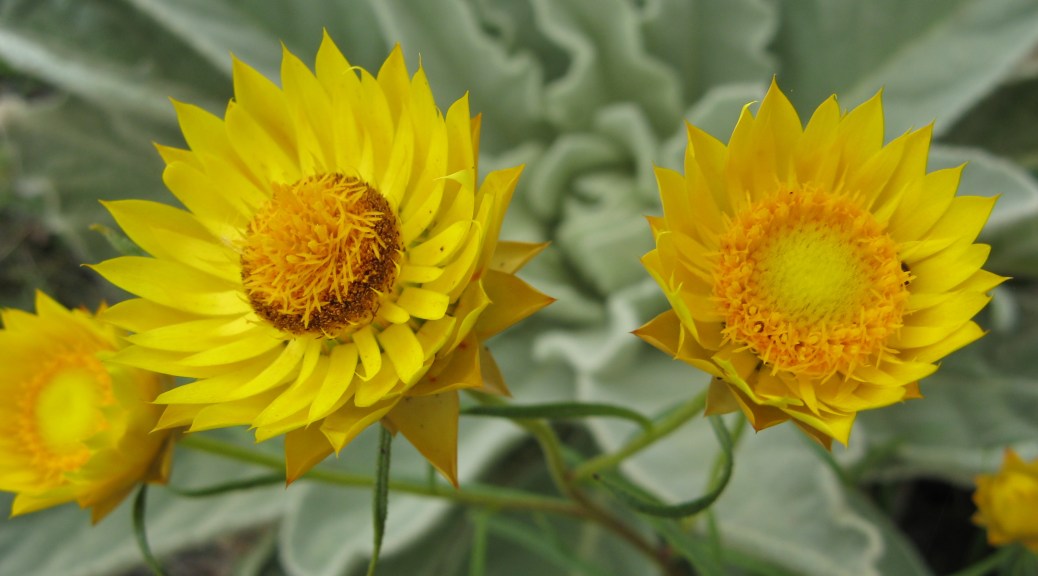
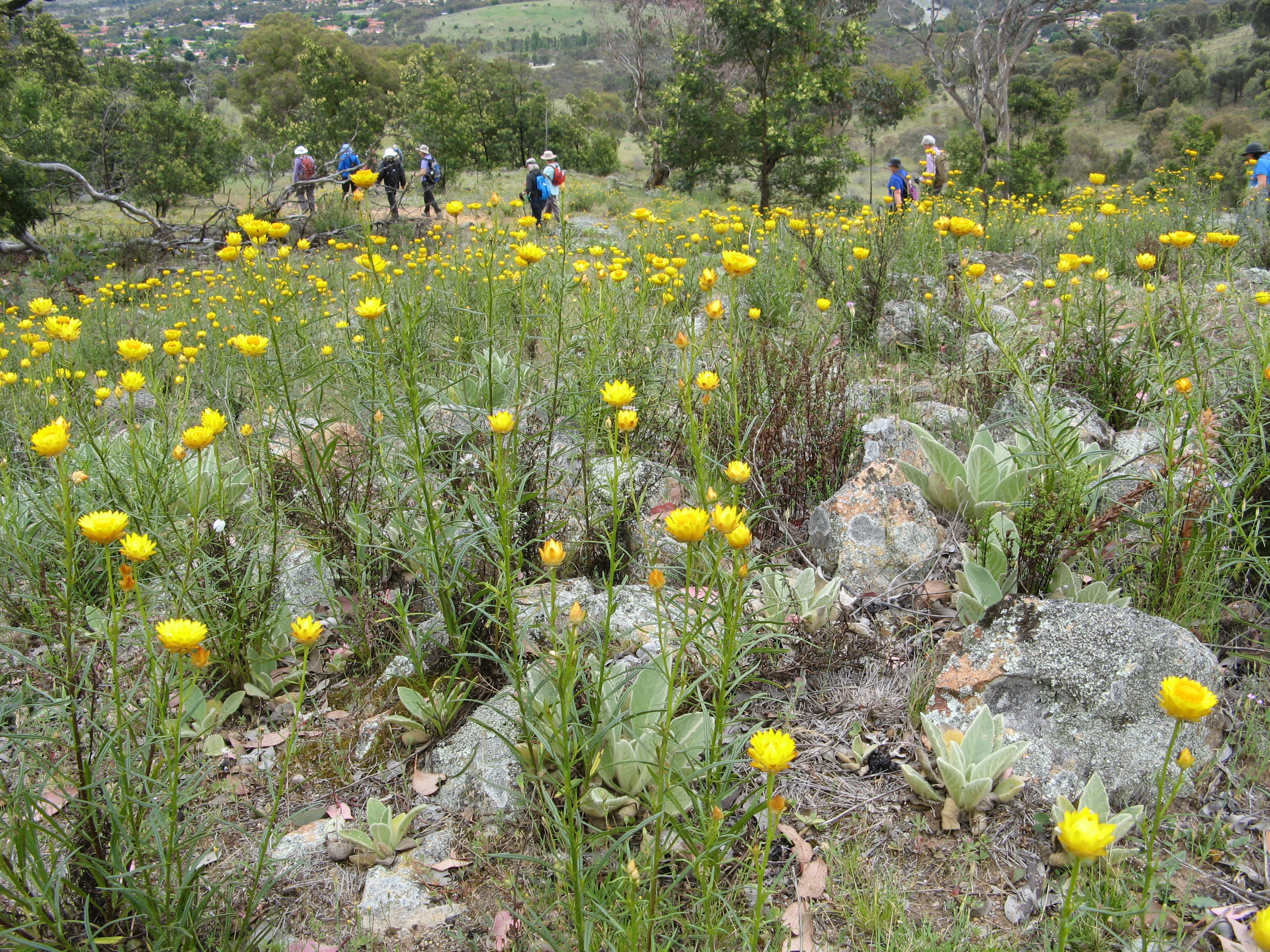
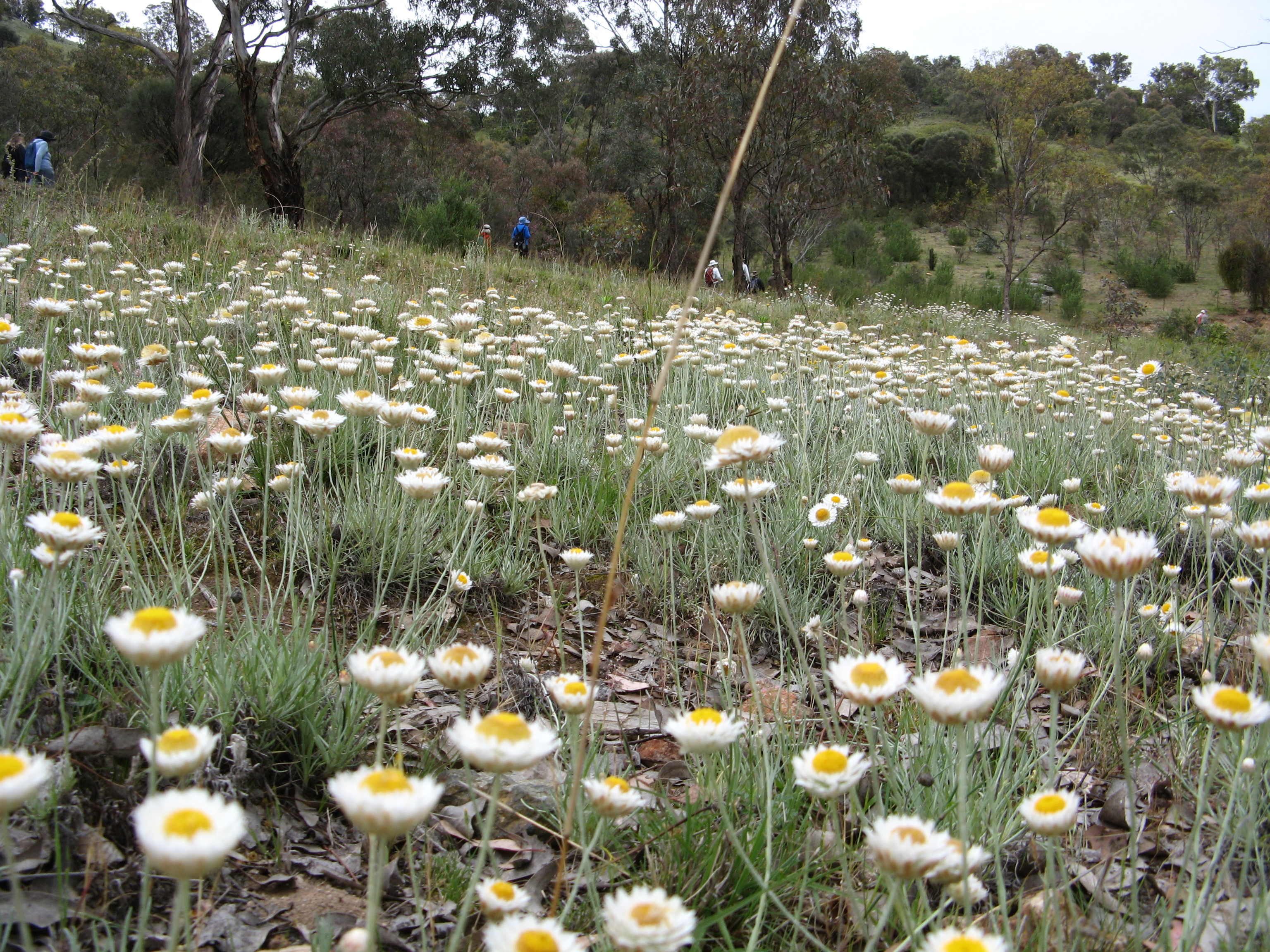
What do retired people do? People who are lucky – healthy, active, sociable? Folk who want to get some exercise, enjoy being in nature or in the outdoors? People who are time rich? Some walk once or twice or three times a week. Some hike with clubs and some with their own networks of buddies.IMG_0128Tuggeranong Hill, almost our back yard, was abloom. Fields of spring flowers coloured our short trek with white, yellow, mauve, pink, purple, blue. Some were weeds but still beautiful and colourful. Some were clustered in isolated groups and others cascaded across the grasslands or lit up the woodland floor. Tiny daisies sprinkled themselves in clumps of lichened rocks. Vanilla lilies danced in the breeze. On the north western sunny side of the hill the wattles brought a pale yellow blush to the greens of the grasses and tree foliage. Yellow everlastings seemed to shine with their own brightness against the overcast, darker blue of the distant Brindabella Ranges. I enjoyed the job of “tail-end-Charlie”, keeping an eye on the slower members of the group, supporting the uphill strugglers and dashing round taking as many flower photos as I could during the walk. Ah. Pleasure indeed.

Cath had planned a varied route that wove around and up and over one part of “our” hill. She had walked it half a dozen times to get it just right. The views through the flower fields across to the mountains going down the far side were wonderful. A brief morning tea on a bike path beside some delightfully flowered feral species then the uphill return. This brought out the puff and some complaints that maybe it was too hard. One fellow, almost 80 with knees and hips that show the wear of marathons and epic walks from younger days, never blanched as we chatted our way slowly upwards. Inspiration. I noticed some at the back of the group who were taking time to appreciate the views and “smell the flowers” while they caught their breath back.This was Cath’s first contribution as walk leader to this community group.IMG_0149Back down on the flat near the back of our house I photographed some of the walkers foregrounded by a large spray of small white everlastings. The gum tree above had been home to a pair of tawny frogmouths who had now gone.IMG_0108


Abseil Guiding

35

Abseil Guiding

20/10/15

Jindabyne Rock

Abseiling


The girls piled off the coach, chatty and ready to go. Harnesses, biners and helmets were distributed and fitted and checked. There were two other young guides, internationals, climbers, adventurers and Lyndsay who took the lead. The atmosphere was vibrant and colourful as we snaked our way across the hillside in a long line to the crag. Jindabyne Rock sits high above the Snowy River opposite the dam where water release for the river fountained in a dull roar below. No clouds – a perfect day. It’s a great venue for an intro group with a good variety of abseiling and climbing possible with safe access routes up and down and a large view spot set back from the cliff edge at the top.

I set up the ropes for my abseil while Lyndsay did a safety talk and outlined the session for the group and their teachers. This was mainstream work for K7 Adventures who were providing the staff, equipment and the overall structure for adventurous activities this group were doing across the Snowy Mountains. They are the industry leaders in the region for roping and backcountry activities for schools, groups and individuals in summer and winter. Their activities range from guiding Mount Kosciuszko for “seven summits of the world” mountaineers to family bushwalks in the alpine areas. The company is run by Peter Cocker, a renowned climber who pioneered some of the Canberra region’s best rockclimbs (eg, Jetts Sett, Equilibrium, Integral Crack) in the earliest days of climbing locally. Together with his partner Acacia, they have built a network of very skilled and experienced guides. I was just helping out as backup while Peter and Acacia were tied up elsewhere. My introductory abseil went well. The girls psyched themselves up, pushed themselves to get over the edge and then felt the exhilaration of success as they descended.

After overseeing establishment of the other ropes Lyndsay worked the arête adjacent to my wall. He top belayed from a small ledge as his climbers worked their way up the most difficult climb. He supported, coached and challenged them then shared in their achievement while he anchored them to the belay. He then instructed them patiently as they abseiled off and down to their friends below. He’s a very capable and mature leader. As the morning progressed he kept a watchful eye on the other ropes and checked in on the abseiling groups higher up.

As we derigged and rolled ropes at the end of the day Lyndsay told me a little about his climbing in Yosemite, France, England and Wales and of his love of steep Spanish limestone. He articulated his dream to work towards his own absolute peak performance at the cutting edge of climbing. It struck me that he was at one extreme of roping and our school clients were at the other. And that Peter had provided the structure and mentoring within his business, tradition, history and experience to bring these together beautifully for the benefit of both.IMG_0709

Vertical Rescue

36

29/10 – 1/11/15

White Rocks, Snake Rock, artificial environment, Legoland

Four days on the rock. Instructing vertical rescue. Outdoor education teachers and uni students in training to be teachers.

Day 1 was an intro – go back to first principals and basic skills – to make sure we were all on the same page and doing the basics in best practice – climbing, belaying, setting up ropes, cliff edge safety, top belaying, locking off, releasable systems.

Day 2 things got more serious as we reshuffled the progression to fit in with the weather forecast – top belay off the harness to “know” what is not ideal, more complex anchoring, assisted abseil with an injured client, retrievable abseil, assisted hoist, z drag on the cliff.

Day 3 up and down from the balcony, prussicing, getting past a knot, more assisted abseils, escaping the system from top and bottom belay, more z drags and then with a compound pulley system, self belays.

It was all highly structured. Very complex processes had been broken down into component parts and the training was sequenced carefully so each simple part built on the previous one until the whole is completed and the objective achieved. The team was a dream. Motivated. Skilled. Focussed. On rock you have a big bag of tricks (skills and knowledge) that can be pulled out and combined to address each emergency situation. Emergencies are usually obvious but can sometimes require complex solutions. 80% of what we do is learning how to manage situations to prevent the necessity for a rescue.

IMG_0079Day 4 was assessment day – abseil guiding setup with a client who had a hair jam, hauling up an injured person, cutaway when all else is not possible, group exercise rescuing an unconscious person, up and down, anchors and more. In the midst of the most intense action a squall hit the exposed outcrop we were working on. Rain and sleet lashed exposed skin. Wind blew up out of nowhere. We continued on. “This is when recues often happen in the field. When you’re tired and cold, at the end of the day, when the weather is at its worst.” After a while it cleared. The sun almost came out. The temperature went back up. Everyone passed.

If only it was as straightforward for us to rescue each other when things get extra tough, when we slip and fall in life and we feel like shit. If only we could just set up a safety for ourselves, put in place a backup system in case it all turns to crap, use a set of basic skills, and then go to each other’s aid with confidence after our safety checks are all done.

As we tidied up the final admin at the coffee shop and reviewed the course one participant said, “Wow. That was intense but it felt authentic”.

IMG_0075

Heroes At The Seaside

34

Heroes At The Seaside

16 – 19/10/15

Cycling and bodysurfing – Illawarra coast

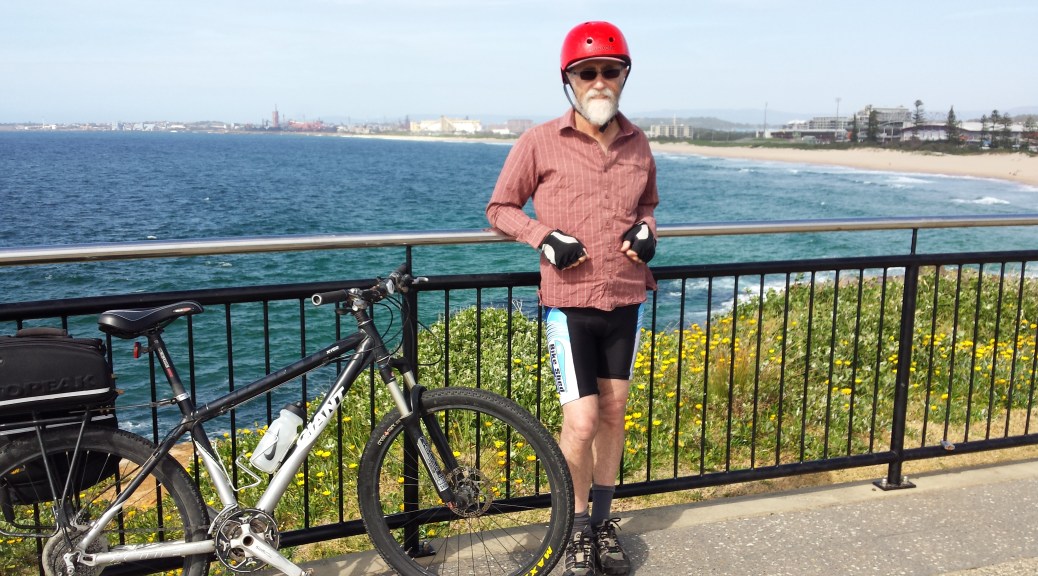
The first afternoon we cycled up the coast. Past beaches, round bays and over headlands. From our camp at Bulli to Thirroul, Austinmer and Coledale. A beautiful cycle path. And later a swim in the still wintery cold sea. The caravan park was nestled between the ocean beach and the cemetery which commanded a wonderful view. Fullish of grey nomads with caravans and a few families. Even a hipster couple towing a vintage caravan beautifully restored.

Bellambi Point
Bellambi Point

Then down the coast next day. This was training for a big cycle trip next year down the Danube – beside the river from it’s source in Germany through Vienna and on to Budapest in Hungary – 1240 km. Past more beaches. Flatter heading south. Saturday morning buzzed in Wollongong. Great views from the headland off to the heavy industry of Port Kembla visible beside smokestacks and belching flames at the steelworks. Skydivers parachuted onto a park behind the beach. The whole place was going off – surfers, joggers, skateboarders, swimmers, walkers, paddleboarders, sailors, fishermen. I took a tumble trying to mtb jump up a too tall gutter on the way back and lost some skin and self-respect. We watched the surfers at Bellambi Point on a slow long board wave. Another cold swim. In the evening we wined at the restaurant on the nearby headland and explored the rock shelf below.

Sunday. Another lap back down to Wollongong. We met up with Rita, a friend of Cath’s, for lunch looking out over the main beach. I have four heroes. She’s one of them. Just as described by Joseph Campbell in his studies of the hero myth she has undertaken the hero’s journey. Without knowing all her personal details I surmise that she grew up in an ordinary family. Some time early on she perceived a call to service, a challenge to serve and joined the Good Samaritan order of nuns.  In her communities she has dedicated her life to helping others and serving her God. She saved my neighbour’s marriage and family in times of distress and reaches out to countless people who struggle day to day. I can only guess at the number of lives she has made a difference in.

“A hero is someone who has given his or her life to something bigger than oneself”. Joseph Campbell

I’m no Christian but I strongly believe that “there are more things in heaven and earth Horatio than are dreamt of in your philosophy” (Shakespeare). Myself and others in my family have experienced important premonitions. I have seen, unaffected by drugs, a person’s aura at a time of heightened perceptivity. I try to tune into intuition when it surfaces. Jung’s idea of a collective unconscious or Bucke’s cosmic consciousness is deeply attractive. ”Mysticism, then, is the perception of the universe and all of its seemingly disparate entities existing in a unified whole bound together by love.” (Moores) I love the science of the universe and the big bang but struggle with the question of what existed prior. My mind bends in its attempt to wrestle with quantum physics and systems theory and it seems that at the cutting edge of understanding there are may be endless possibilities. So while not quite an atheist I keep an open mind on the existence of some unifying spirit in the world. For me this is closely tied to landscape and the natural world. I feel a strong empathy with Aboriginal relation to the land. I was deeply moved in witnessing the strength of belief of hindus at Varanasi as they burnt the bodies of their kin to release their immortal souls. I would love to believe in angels like Muslims and Christians. I find the notion of a compassionate God too difficult in a world of much distress. I see religion and “churches” as the source of much war in the world based on conflicting belief systems much like patriotism and the arbitrary nature of borders between countries.

Rita is over 70 now and it was a privilege to spend a lunch time with her, go for a short walk and have a coffee. In a less chauvinistic religion she would be a spiritual high priest or bishop as well as a living treasure.

On the return ride we stopped at a small outlook. As I watched the swells sweep over the rocks I thought of my Mum lying small and broken in her bed in her last days. She’s another of the 4.

“When your time comes to die, be not like those whose hearts are filled with fear of death, so that when their time comes they weep and pray for a little more time to live their lives over again in a different way. Sing your death song, and die like a hero going home.” Tecumseh

What makes a hero? – Matthew Winkler  (TED Ed)

Snakes and Lizards

33

Snakes and Lizards

15/10/15

Western Foreshores Walk – Googong Dam carpark to Tin Hut return – 21 km

Hiking


Like a reptile on a cold morning I awoke stiff and slow. Hands took time to loosen up and feet were still sore from a walk the day before round the lake. Motivation lacked for the day’s walk. Fire trail, mostly flat with the occasional drop into and climb out of creek gullies. Walked and talked like the day before when I had been out with retired work buddies – round Lake Burleigh Griffin – past the High Court and Kingston Foreshores. Then we had lunched like never before while we had been too busy working. Now time rich we had time to walk, to exercise properly, to chat, to be buddies.

Walk and talk. Mostly I’m a “bushwalker”. It takes me time to ease into this slightly more mundane style of walking. Talk. With a fellow who had actively walked many of the classic long trails in Europe with his wife until she had been injured in a cycling accident. Now he’s the full time carer as she is wheelchair bound. His walk today is a fortnightly treasure.

Black snake beside the path sunned itself, alert to our passing, head raised.

IMG_0700

There was not a house in sight. 40 minutes from Canberra. Pleasant ex-farming land now water catchment for the water supply dam.

Talk and walk. A bioscience man who had worked for CSIRO for most of his working life then worked voluntarily with them for another decade after retiring. Another guy who had led more than 100 walks for the group.

Spiky dragon lizard on a post watches on as we slowly edge by.

Walk. And talk. The “marathon lady” related how she was training for the London Marathon. She had completed countless marathons around the world – walking! Apparently overseas it is popular for people to walk in the events. She does around 7 hours. This opened anew my desire to complete my number 9 and 10 Canberra Marathons – perhaps with some walking as required. Inspiring talk.

I finish enlivened by the stories.

52 Adventures. That's the aim. One each week. Like any real adventure the outcome is unknown. The journey, the comrades, the solitude, the challenges, the special places are what matters. And this is the record – writing, images and video. Enjoy.